—
Understanding the Basics of a Conventional Mortgage
When you are looking to buy a home in Salem, OR, choosing the right financing path is one of the most important decisions you will make. A conventional mortgage is a highly popular choice for many buyers. Unlike government-backed loans, a conventional fixed-rate mortgage is offered by private lenders and follows guidelines set by Fannie Mae and Freddie Mac.
Why do so many homeowners prefer this route? It offers incredible stability. With a 30-year fixed-rate mortgage, your interest rate and monthly principal payments remain exactly the same for the entire life of the loan. This predictability makes budgeting easier for families and real estate investors alike.
At Mortgage Marketplace LLC, we understand that finding the perfect loan structure can be overwhelming. That is why we are experts at providing second opinions on conventional mortgages. If you have already received a quote from another lender, let us review it. We compare options across multiple lenders to ensure you are getting the most competitive rates and flexible terms available in the market.
Conforming vs. Non-Conforming Conventional Loans
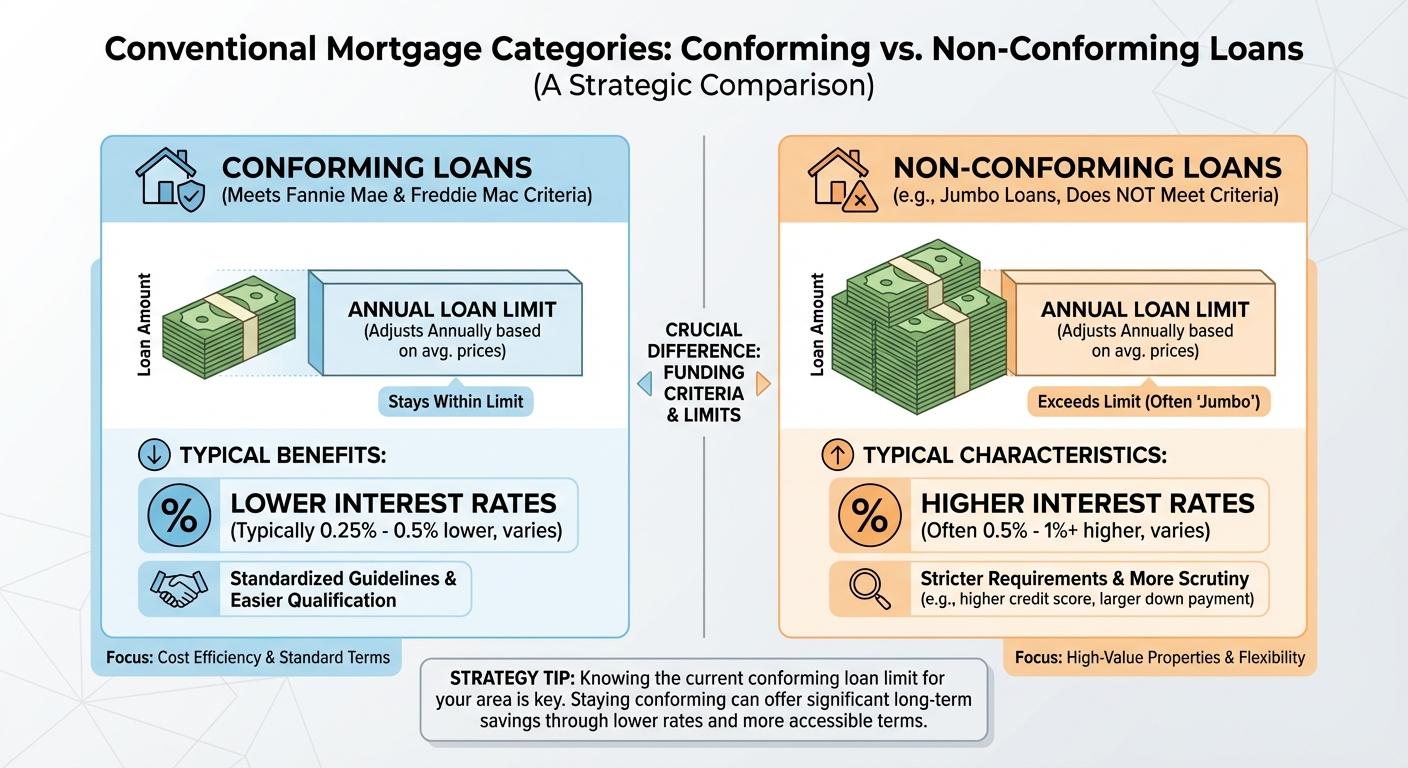
When exploring a conventional mortgage, you will quickly encounter two main categories: conforming and non-conforming loans. Knowing the difference is crucial for your home buying strategy.
- Conforming Loans: These mortgages meet the specific funding criteria set by Fannie Mae and Freddie Mac. The most notable requirement is the maximum loan limit, which changes annually based on average home prices. If your loan amount falls within this limit, you typically benefit from lower interest rates and standard qualification guidelines.
- Non-Conforming Loans: Mortgages that exceed these standard limits or have unique qualifying criteria fall into this category. The most common type of non-conforming loan is a jumbo mortgage. These are designed for luxury properties or homes in highly competitive markets where prices exceed standard conforming limits. Because they cannot be sold to Fannie Mae or Freddie Mac, lenders often require higher credit scores and larger down payments.
Whether you need a standard conforming loan or a non-conforming jumbo option, our team in Salem is here to guide you. If you are struggling to qualify for a conventional path, we can also help you explore alternatives like an FHA purchase loan to keep your homeownership dreams on track.
| Feature | Conforming Conventional Mortgage | Non-Conforming (Jumbo) Mortgage |
|---|---|---|
| Loan Limits | Adheres to Federal Housing Finance Agency (FHFA) limits | Exceeds standard FHFA loan limits |
| Credit Score Requirement | Typically 620 or higher | Usually requires 700 or higher |
| Down Payment | As low as 3% for first-time buyers | Typically 10% to 20% or more |
| Interest Rates | Highly competitive and standardized | Can be slightly higher due to increased lender risk |
Why Get a Second Opinion on Your Conventional Mortgage?
Securing a conventional fixed-rate mortgage is a major financial commitment. Even a fraction of a percent difference in your interest rate can save or cost you thousands of dollars over the life of your loan. That is exactly why securing a second opinion is a smart financial move.
Many buyers accept the first offer they receive from their local bank without realizing that better terms might be available. As an independent mortgage broker, Mortgage Marketplace LLC has access to a wide network of lenders. We take pride in our ability to provide expert second opinions on conventional mortgages. We will review your current pre-approval or loan estimate, compare it against our extensive lender network, and clearly explain the trade-offs.
Our goal is to give you more control over your financing. Whether you are purchasing your first home in Salem or refinancing an investment property, we ensure your loan structure aligns perfectly with your long-term financial goals.
Q1: What is a conventional fixed-rate mortgage?
A conventional fixed-rate mortgage is a home loan not backed by a government agency, where the interest rate remains exactly the same for the entire duration of the loan.
Q2: What credit score do I need for a conventional mortgage?
Most lenders require a minimum credit score of 620 to qualify for a conventional mortgage, though higher scores often secure much better interest rates and terms.
Q3: How much down payment is required for a conventional loan?
While many believe you need 20 percent down, qualified first-time homebuyers can often secure a conventional mortgage with as little as 3 percent down.
Q4: Why should I get a second opinion on my mortgage?
Getting a second opinion ensures you are receiving the most competitive interest rates and loan terms available. We specialize in reviewing existing offers to find you better financing options and potentially save you thousands.
Q5: Are conventional loans better than FHA loans?
It depends entirely on your unique financial situation. Conventional loans often have lower mortgage insurance costs for borrowers with good credit, while FHA loans can be more forgiving with lower credit scores and higher debt-to-income ratios.
Call Mike Gillett at (503) 510-8780 for Your Free Second Opinion


